Shannon Miller put it plainly: “The trouble is, you cannot outwork cancer.”
For most of her life, Miller could measure progress in repetitions: one more push-up, one more routine, one more landing. The girl who grew up in Edmond turned those ordinary days of work into an extraordinary career, winning seven Olympic medals and two world all-around championships before her 20th birthday.
Then a rare form of ovarian cancer forced Miller to reconsider the self-reliance that had carried her so far. Determination still mattered. Discipline still mattered. But neither could replace the help of a team.
Miller said, “My cancer diagnosis and treatment was a curveball I never saw coming. I was always a workhorse in the gym. I was not the most talented, the strongest, or the most flexible, but I would outwork anyone.”
Miller will share lessons from her athletic career, cancer diagnosis and life beyond gymnastics at 11 a.m. Thursday, Sept. 10, in the Jeff Johnston Fine Arts Auditorium at Seminole State College. The event is free and open to the public. Her presentation is part of the 2026 “Wellbeing and Resilience” theme of SSC’s Native American-Serving Nontribal Institutions program and will serve as a culminating event for the final year of the College’s current five-year NASNTI grant.
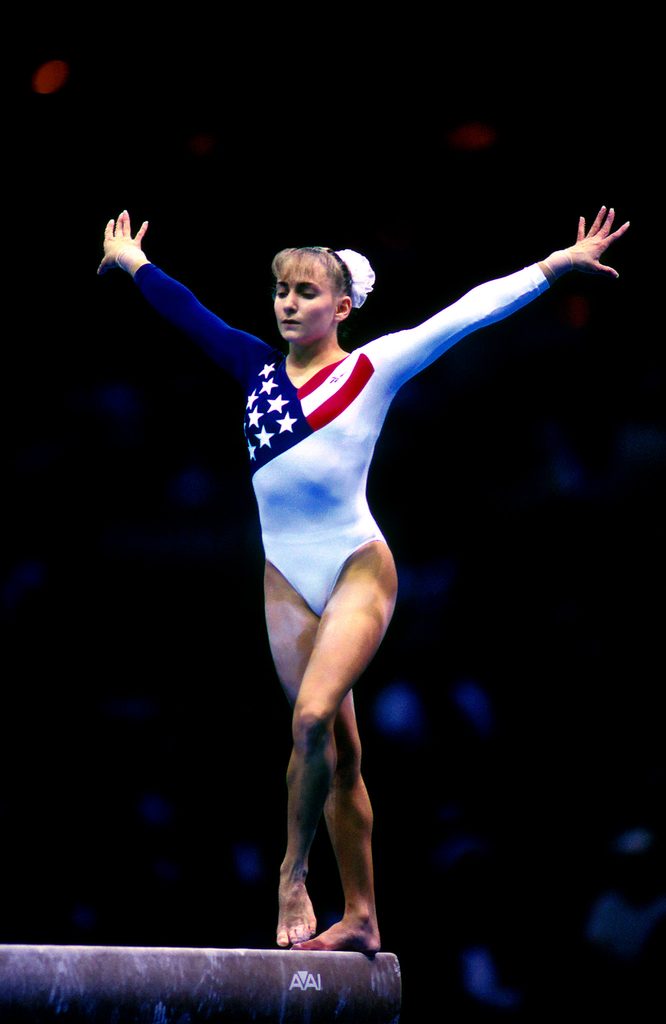
Miller was raised in Edmond, attended Edmond North High School and trained throughout her competitive career in Oklahoma. Even as international competitions began taking her farther from home, she said the people around her made sure her identity did not rest entirely on her results.
“I feel very fortunate to have grown up in the Oklahoma community,” Miller said. “Training and competing at such a young age, what I remember most is that everyone was supportive, win or lose. I always felt cared about as more than an athlete.”
That support offered a sense of perspective that could be difficult to maintain in a sport measured by fractions of a point.
“That support was a constant reminder that gymnastics was not life,” Miller said. “It was something I loved and enjoyed, but there were so many other amazing things to pursue.”
At 15, Miller competed in her first Olympic Games in Barcelona in 1992. She earned five medals, two silver and three bronze, the most won by a U.S. athlete in any sport at those Games. She went on to become the first U.S. gymnast to win consecutive world all-around titles, taking the championships in 1993 and 1994.
Four years after Barcelona, Miller helped lead the “Magnificent Seven” to the United States’ first Olympic team gold medal in women’s gymnastics. She also won the balance beam competition, becoming the first American gymnast to capture Olympic gold in the event.
Across her career, Miller earned 59 international and 49 national competition medals, including nine world championship medals. She was inducted into the Oklahoma Hall of Fame in 2017.
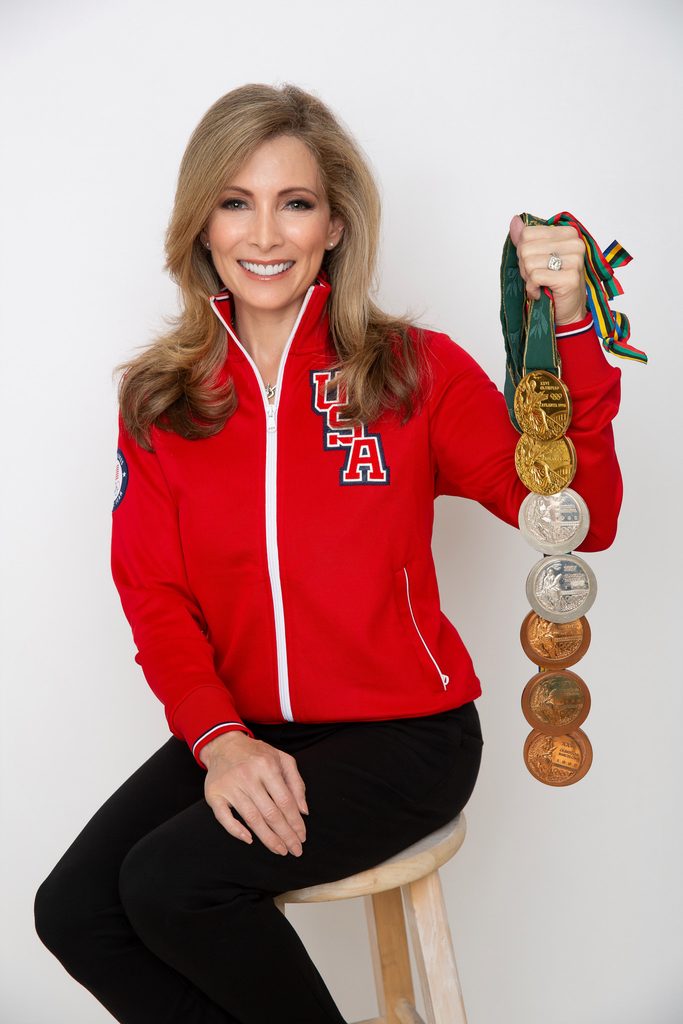
Yet medals were rarely how Miller and her coaches measured progress. They focused instead on the next skill, routine or competition within reach. The Olympics did not become the goal until it was the next logical step.
“We never talked about medals or winning as success,” Miller said. “We talked about which skills I wanted to learn and which competitions I would like to qualify for.”
She still relies on that approach.
“You do not make it to the Olympics without the push-ups, the sit-ups, the boring work,” Miller said. “The same is true in life and in a career.”
The medals also conceal the falls that came before them. Miller remembers failing repeatedly in practice and learning not to treat each mistake as a verdict on her ability or future.
“Failure is part of the process,” Miller said. “I like to say fail early and fail often.”
Some of those failures happened far from public view. Others unfolded before an international audience.
“I have failed privately, and I have failed extremely publicly, in ways that can be relived on YouTube forever,” Miller said. “It always hurts. It can be embarrassing. It can feel like you will never recover. You will.”
Her advice is to acknowledge the disappointment without allowing it to become permanent.
“Take the failure, feel bad for a bit, then take a deep breath, think about what you can learn from it, and find your next forward step,” Miller said.
Stepping away from Olympic competition presented a different challenge. Gymnastics had supplied not only a demanding schedule and a clear set of goals, but also a team of people invested in helping her succeed.
“When I retired at 19, I lost my entire support team overnight,” Miller said.
Miller began building a life that would eventually include higher education, law, broadcasting, business, motherhood and health advocacy. She earned undergraduate degrees in marketing and entrepreneurship from the University of Houston and a law degree from Boston College. An opportunity to work in gymnastics broadcasting arrived while she was in school, allowing her to remain connected to the sport while developing a new career.
She said students should not feel pressured to identify one path that must define the rest of their lives.
“Your first job does not have to be the thing you do forever,” Miller said. “Learn as much as you can. Try new things. That curiosity will prove useful, maybe immediately, maybe ten years down the road.”
In January 2011, doctors removed a tumor and diagnosed Miller with a rare form of ovarian cancer. She underwent chemotherapy and is now 15 years cancer-free. The experience turned her familiar lessons about goals and perseverance into tools for recovery, but it also exposed a flaw in her instinct to handle every challenge herself.
“It was extremely humbling to have to ask for help,” Miller said. “It was not easy, and it took me longer than it should have, but eventually I realized I could not do it alone.”
Looking back, Miller recognized that even the most individual moments of her gymnastics career had never truly been individual.
“I would never have expected to make an Olympic team on my own,” Miller said. “I had coaches, trainers, parents, and an entire support system working with me every day for years. Of course we should have a team around us during cancer treatment too. Once I started looking at it that way, it was a lot easier to accept help.”
That realization now shapes Miller’s work as founder and CEO of Salto Health, a platform that helps cancer survivors and caregivers identify practical products and services needed during treatment and recovery. The name is a nod to a somersault and to the unexpected turns that can leave a life feeling upside down.
When Miller looks ahead to the students who will be sitting in the SSC auditorium, she knows some may be facing financial difficulties, family responsibilities, academic setbacks or uncertainty about what comes next. Her central message to them is not about medals, flawless routines or overcoming every obstacle through willpower.
“You are not alone,” Miller said. “At times it may feel like it, but there are wonderful resources all around you. Talk with others. Find the resources that can help.”
For the athlete who spent years learning that no one else could perform a routine for her, one of life’s most important lessons was recognizing that doing the work does not have to mean doing it alone.
“Trying to manage everything by yourself is admirable, but it does not always get the job done,” Miller said. “Finding a team who can help is critical in every part of life and work. So do not ever be afraid to reach out and get that help.”