Seminole State College students, employees and community supporters traveled to the Oklahoma State Capitol on March 31 to participate in Higher Education and Oklahoma’s Promise Day. Sponsored by the Oklahoma State Regents for Higher Education, the event highlighted the value of public higher education in Oklahoma and celebrated continued legislative support for initiatives such as the Oklahoma’s Promise scholarship.
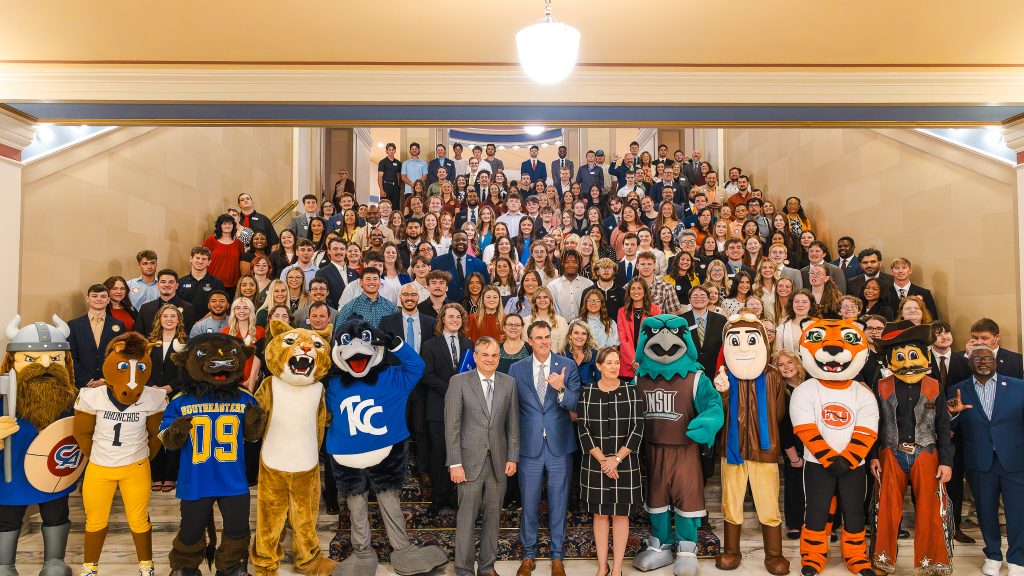
SSC was represented by 67 delegates, including 38 students. Members of SSC’s President’s Leadership Class students and Oklahoma’s Promise scholarship recipients visited the offices of local representatives during the day’s activities.
Community supporters attending in support of SSC were Regent Teresa Burnett, Brad Burnett, Karel Brewster, Brig. Gen. Brad Carter, Randy Gilbert, Suzanne Gilbert, Dr. Donna Hardin, Jim Hardin, Kim Hyden, Harrel Kennedy, Dr. Rebecca Kennedy, Jeramy Rich, Steve Saxon and Mark Schell.
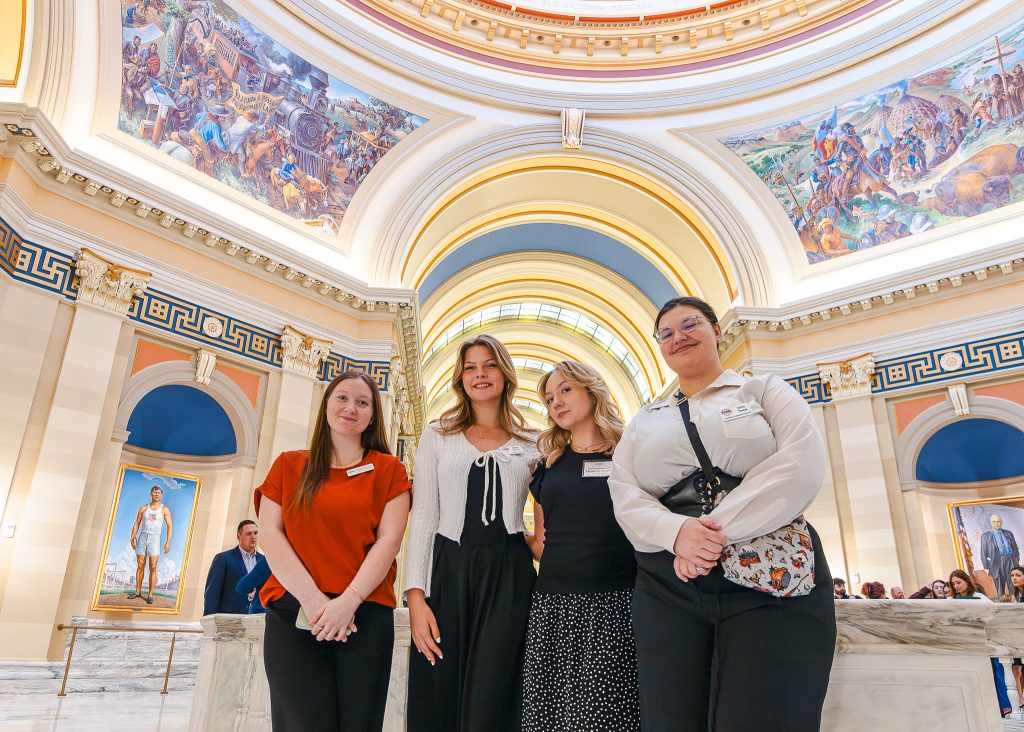
The SSC delegation later gathered for lunch at the Faculty House, where they heard remarks from State Senators Grant Green and Darcy Jech and State Representatives Danny Williams and Danny Sterling.
In the afternoon, SSC students joined delegations from colleges and universities across the state for the Higher Education and Oklahoma’s Promise Day Program in the House Chambers.
Speakers at the event included Gov. Kevin Stitt, Sen. Adam Pugh, Sen. Ally Seifried, Rep. Collin Duel, Rep. Mark Lawson, Rep. Arturo Alonso-Sandoval, State Regents Chair Courtney Warmington and Chancellor Sean Burrage.
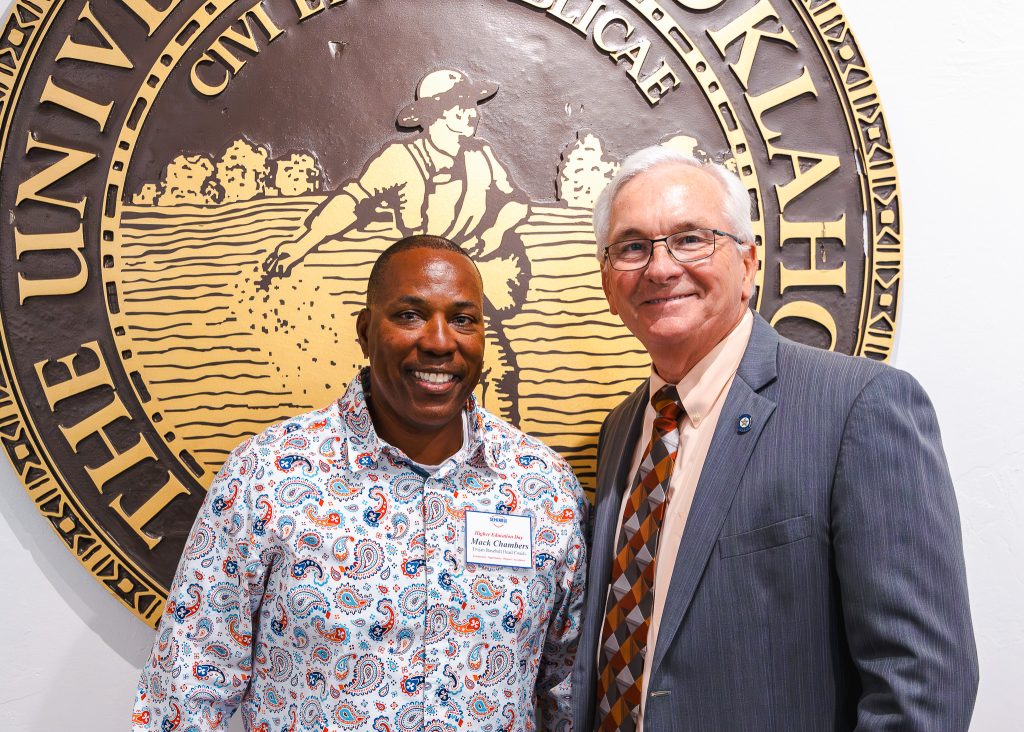
“Students, faculty and staff from Oklahoma’s public colleges and universities came together at the State Capitol today to showcase the impact of investing in public higher education and the importance of the Oklahoma’s Promise scholarship,” Chancellor Sean Burrage said during the statewide event.
Higher Education and Oklahoma’s Promise Day is held annually to demonstrate the importance of higher education to Oklahoma’s workforce and economy. The State Regents noted that more than half of Oklahoma’s top 100 critical occupations, including the state’s 22 highest-paying careers, require a college degree.