A stand against political interference brought Mitchell to Seminole, where he created a college built around local access and opportunity.
Long before Seminole State College had an independent governing board or a permanent campus, its future was shaped by an educator whose stand against political interference cost him one of Oklahoma’s most prominent college presidencies.
John G. Mitchell served as president of Central State Teachers College in Edmond, now the University of Central Oklahoma, from 1919 until 1931. His tenure ended during the administration of Gov. William H. “Alfalfa Bill” Murray. According to Mitchell’s 1956 obituary, Murray fired him after Mitchell refused to allow distribution of the Blue Valley Farmer, the governor’s political publication, and ordered its solicitors off the Central State campus.
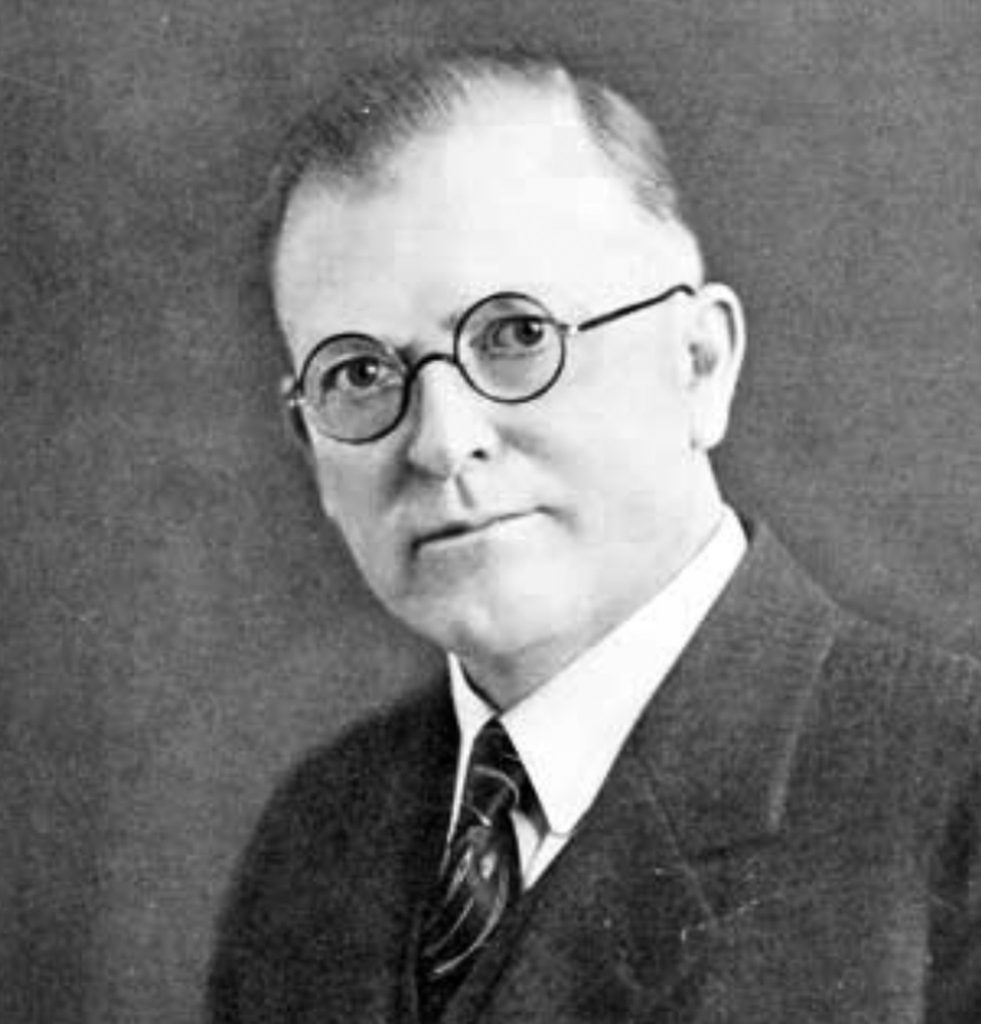
The dismissal closed one chapter of Mitchell’s career but opened another that would shape higher education in Seminole for generations.
Mitchell came to Seminole in 1931 and became superintendent of Seminole Public Schools. During his first school year, which was also the first full term in the newly completed Seminole High School building, he organized Seminole Junior College as part of the public school system.
The college’s first class included 51 students, according to a state report compiled from annual junior college records. Classes were held in the high school, with faculty teaching subjects that included English, French, history, mathematics, science and physics.
That arrangement reflected the municipal junior college model common in Oklahoma at the time. The college operated as an extension of the high school and provided graduates with access to grades 13 and 14 close to home. During the Great Depression, that local option gave students an opportunity to begin college without the expense of moving away.
The institution quickly established itself. By 1936, the state officially classified Seminole Junior College as a two-year municipal junior college and identified Mitchell as its superintendent. State records show enrollment had grown to 85 students by that year.
The junior college was only one part of Mitchell’s impact on Seminole education. During his 14 years as superintendent, Roosevelt and Lincoln grade schools were established. His obituary credited him with developing Seminole’s schools into one of Oklahoma’s strongest public school systems.
Mitchell brought decades of experience to that work. A native of McMinnville, Tennessee, he attended George Peabody College for Teachers in Nashville before coming to Oklahoma in 1905. He served as superintendent of schools in Checotah and later Pryor before becoming president of Central State Teachers College. He earned a master’s degree from the University of Oklahoma and taught there while completing graduate work.
His influence extended across the state. Mitchell helped organize the Oklahoma Education Association, was elected its first treasurer and held that position for 25 years. In Seminole, he served as president of the Rotary Club and received a lifetime membership in 1955. He was also a member of First Methodist Church.
Mitchell retired from the Seminole school system in 1945 after approximately 40 years in Oklahoma education. He died at his Seminole home on Feb. 9, 1956, at age 76.
His most enduring achievement remains the college he organized during his first year in Seminole. What began with 51 students sharing a high school building survived the Depression, World War II and repeated changes in public higher education before becoming today’s Seminole State College.
“Give us your cooperation today, and we will endeavor to repay you with a higher form of citizenship tomorrow.” – John G. Mitchell
Ninety-five years later, that promise remains at the heart of the college he helped create.