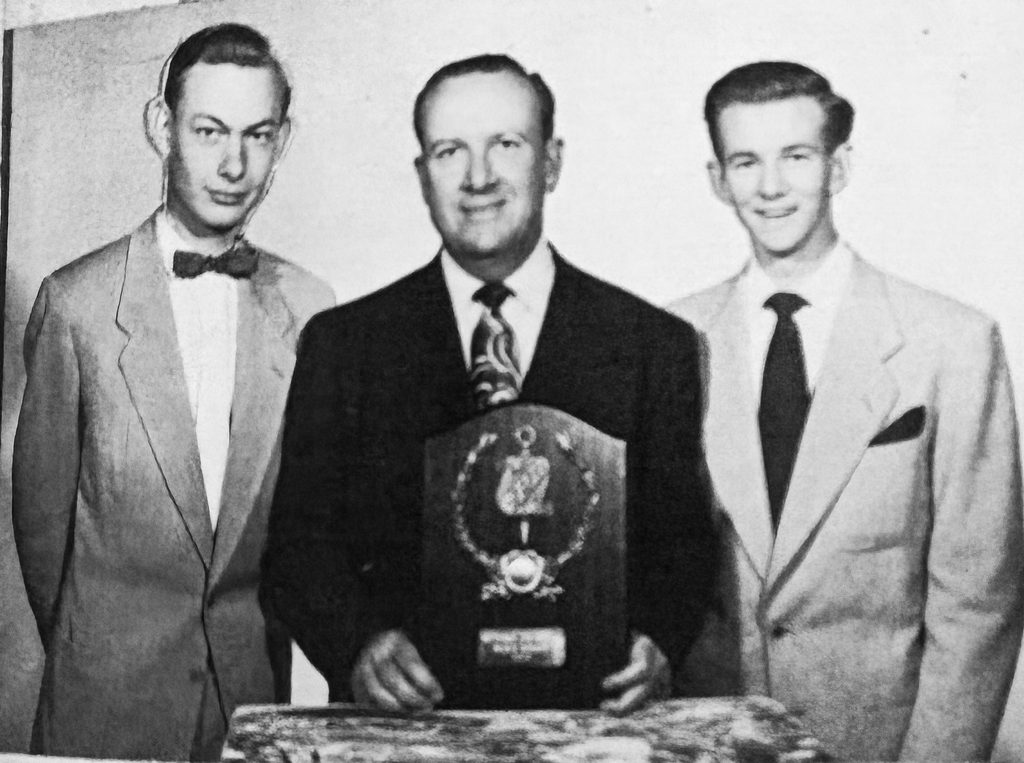
Bill Wantland, now 92, was still a high school senior when Tommy Kelton asked him to become his debate partner at Seminole Junior College. Together, they won a national championship in 1952.
Their victory in Pueblo, Colorado, remains one of only two national titles in the history of the institution now known as Seminole State College. The Belles won the other in women’s basketball in 1976.
For Wantland and Kelton, the partnership continued through careers that took them far from Seminole, visits across state lines and a time when one friend needed the other’s help.
Kelton had graduated from Seminole High School four years ahead of Wantland. Before he turned 13, he had lost both parents to tuberculosis. His mother, Ruby, died in 1942, and his father, Thomas, died in 1944. His aunt and uncle, Charles and Irene Ledgerwood, raised him in the Phillips camp in Seminole.
In 1946, Kelton began delivering The Seminole Producer. A year later, publisher Milt Phillips devoted a column to the young carrier, who was president of his junior class, ranked in the top 10% academically and had been elected the school’s outstanding student by his classmates. He already planned to enter the ministry.
Phillips described Kelton as an “efficient, courteous and prompt carrier-salesman.” The publisher noted that Kelton could have used his newspaper route or the distance he traveled to school as reasons to miss school activities. Instead, he found time for them.
“He just goes right ahead and does those things he enjoys doing, and he does them well,” Phillips wrote in the June 3, 1947, column.
Wantland grew up in a family closely connected to Seminole schools. His father taught business subjects at the high school and coached track and football. Wantland played football in junior high, too, but continuing in high school would force a decision. Games were on Friday nights, and debate tournaments took place on Fridays and Saturdays.
Harland B. Mitchell, the high school principal and debate coach, told him he could not do both.
“So I chose debate,” Wantland said.
Wantland remembers Mitchell as a demanding coach.
“He wouldn’t put up with any nonsense,” he said.
Mitchell expected students to research their arguments and practice their delivery. He also brought former debaters back to work with his teams.
“So we were in contact with top-notch debaters from previous years that would come back and work with us,” Wantland said.
When Kelton returned to Seminole to attend the junior college, Wantland was finishing high school and taking college courses. The two schools shared a building, and Wantland enrolled in third-year Spanish and college debate.
“So my senior year in high school was also my freshman year in college,” he said.
The two already knew each other, and Kelton wanted Wantland as his partner. Mitchell approved the arrangement.
By the time they reached Pueblo, they had competed in several large tournaments. Wantland recalled winning state tournaments in Oklahoma, Kansas and Missouri, where competition was open to schools from other states.
He also had another reason to look forward to the trip. A young woman he had met in high school was attending school in Pueblo.
“And so I was looking forward to seeing her,” he said.
The competition itself felt familiar, even with a national title at stake.
“Quite a big thing, but we’d been to a number of big tournaments, so this was no bigger than most,” Wantland said. “It was just a lot more important.”
According to a March 23, 1952 report in The Seminole Producer, the tournament demanded eight debates over four days before the Seminole pair reached the final against a favored team from Ogden, Utah. They won the championship late Saturday afternoon.
Both also earned individual speaking honors. Kelton placed first in extemporaneous and impromptu speaking, while Wantland placed in both events.
For Mitchell, the next challenge was getting the champions home. Snow had fallen for three days, and another round began shortly before he called the newspaper to report the victory.
“We expect to get out of this snow area tonight before the roads get blocked again,” Mitchell said.
After Seminole, Kelton pursued the ministry he had envisioned as a high school student. He became a Church of Christ minister and served as a missionary in Nigeria.
Wantland’s education took him to three universities, with his FBI employment helping determine the route. After two years at the University of Oklahoma, he married and accepted a government job in Washington, where he attended George Washington University. A transfer to the FBI’s Honolulu field office took him to the University of Hawaii.
There, he helped screen workers headed to atomic bomb testing sites while continuing his studies. He earned a history degree in 1957 and was named valedictorian of his graduating class.
Wantland later studied law at Oklahoma City University and returned to Seminole to practice. In the courtroom, he found himself drawing on the skills he had practiced under Mitchell.
“If you argue in debate, well, basically a trial is a debate between the defense and the prosecution or the plaintiff and defendant in the civil case,” he said.
During those years, Kelton was also living in Oklahoma and serving as a minister. The friends continued to visit, but Kelton’s struggle with bipolar disorder eventually brought him to Wantland under more difficult circumstances.
“He came to visit me, and it was clear that he was in real need of being hospitalized,” Wantland said.
Wantland went to the sheriff’s office and district court to seek help.
“The judge, bless his heart, couldn’t say, ‘I find you mentally incompetent,'” Wantland said. “But he did say, ‘If you’re not going to go voluntarily, there’s nothing I can do to help you, and you’re going to end up dead.’ That shook Tommy up. And Tommy said, ‘How would I get there?'”
After Kelton agreed to enter treatment, the sheriff drove him to a hospital in Norman.
Kelton later wrote about his struggles with mental health in his memoir, “More Than a Conqueror.” In the book, he credited Wantland with saving his life.
The two stayed connected as their careers carried them elsewhere. Wantland’s public service included roles as president of the Seminole City Council, municipal judge, Seminole Nation attorney general and the first chief justice of the Seminole Nation Supreme Court. He also served as Episcopal bishop of Eau Claire, Wisconsin, where Kelton and his wife traveled to visit him.
Through treatment, Kelton found medication that helped him manage his manic episodes. He resumed preaching, ministering in Camden, Arkansas, and cities throughout Texas, such as Odessa, Vealmoor, Abilene, Blackwell and Pharr.
Their friendship continued until Kelton’s death in 1998. When Kelton was later inducted into the Seminole High School Hall of Fame, his widow could not attend. Wantland spoke with her and sent her the plaque.
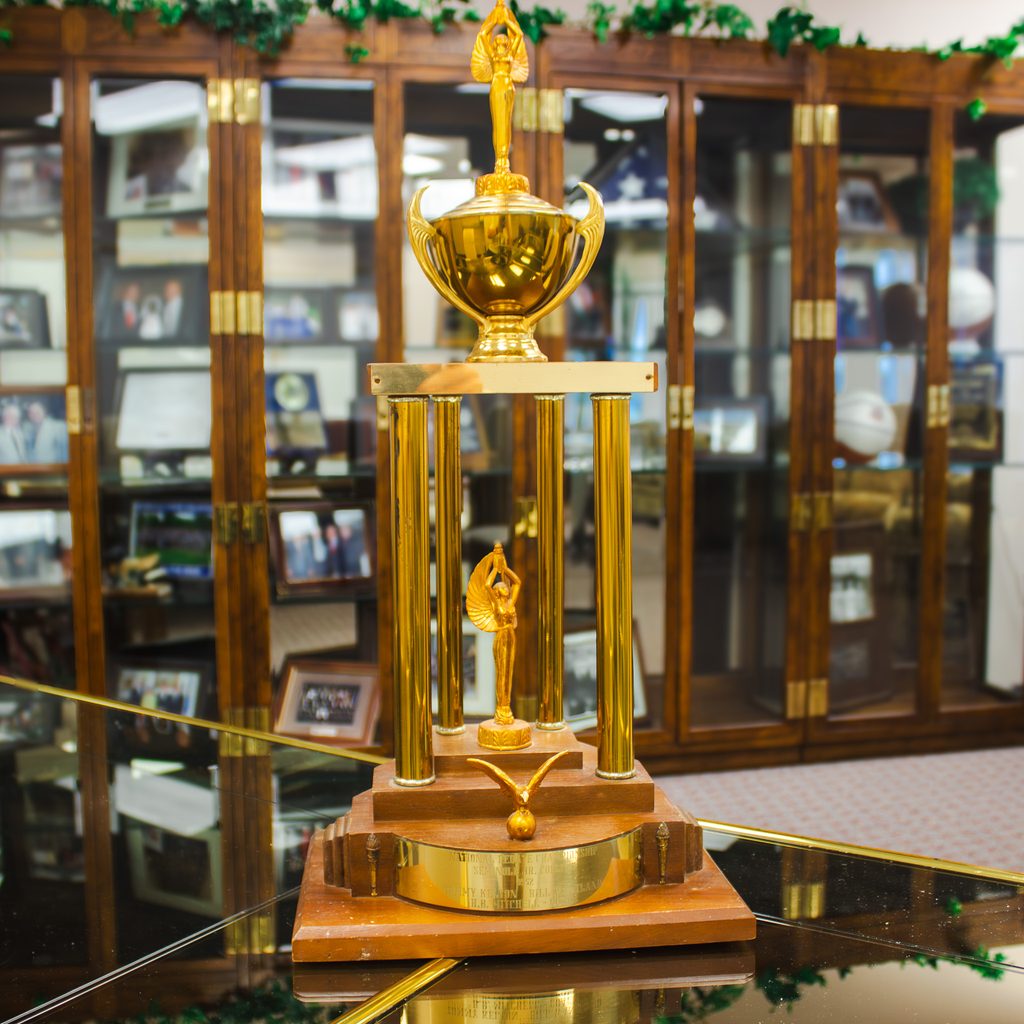
In 2005, Wantland donated $10,000 to the SSC Educational Foundation to establish the Kelton-Wantland Scholarship for students studying speech and debate. In 2014, he donated the 1952 national championship trophy to SSC. It is housed on the second floor of the Enoch Kelly Haney Center.
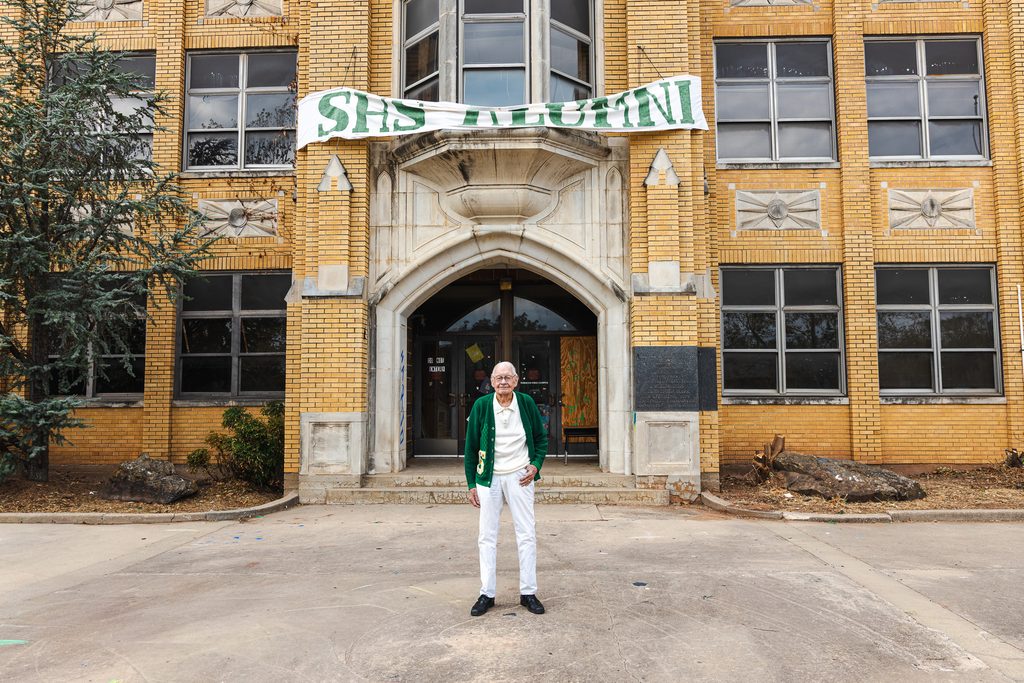
At the end of his interview, Wantland agreed to meet for a photograph at the old Seminole High School during homecoming weekend on Sept. 26.
“Since it’s homecoming, I’ll have on my debate letter sweater,” he said.