Before David Boren became governor of Oklahoma or a U.S. senator, Harland B. Mitchell was trying to get him to speak in class.
Boren was frightened of addressing an audience, even his classmates. In a 2016 interview with Voices of Oklahoma, he recalled sitting through debate class while the other students got up to speak. Near the end of the semester, Mitchell gave him a warning.
“You’re going to get an F if you don’t get up and speak,” Boren remembered his teacher telling him.
Boren got up. He remained shy enough to keep his parents away from his debate tournaments, but Mitchell had pushed him past the first obstacle.
That classroom encounter was part of a teaching career that helped make Seminole a national name in debate. Known to generations of students as H.B. Mitchell, he coached high school and junior college competitors who shared a building and a demanding teacher. His work helped establish a debate tradition at the institution now known as Seminole State College, and his former pupils remembered his expectations long after they left school.
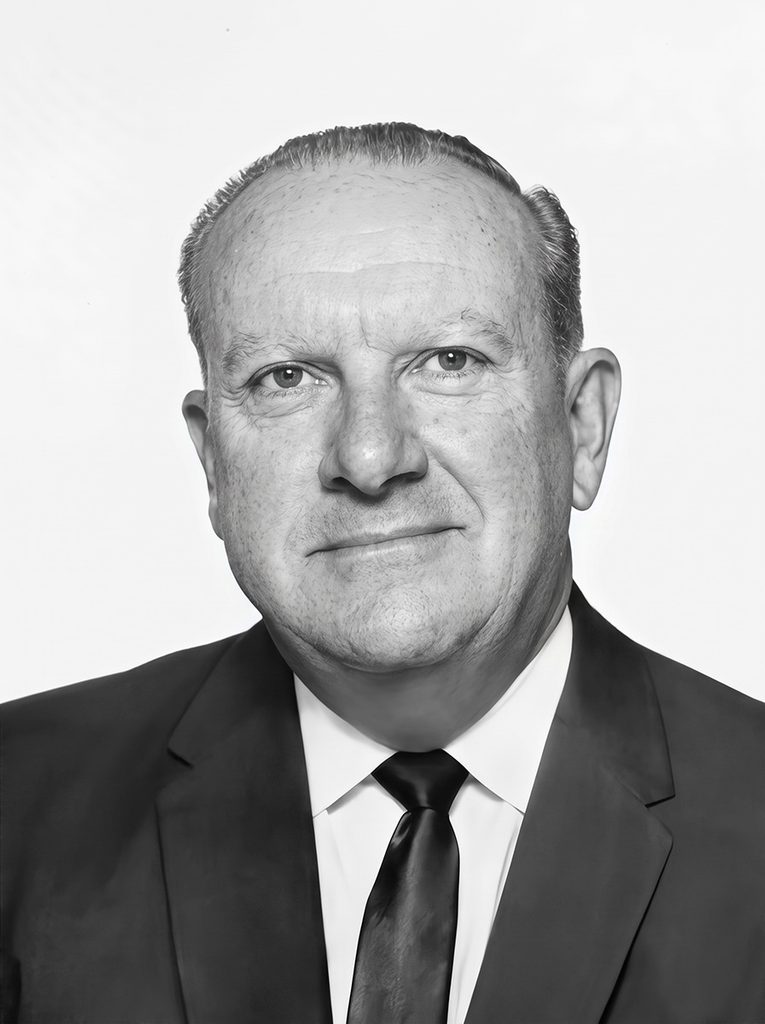
Mitchell’s own interest in speaking began at home.
“Because my father did a lot of public speaking, I became interested in debate,” he told The Seminole Producer in 1963.
According to that account, Mitchell won a Tennessee high school debate championship and a scholarship to Central State Teachers College in Edmond, now the University of Central Oklahoma. There, he became a college debater while his uncle, John G. Mitchell, served as president.
Both men came to Seminole in 1931. After Gov. William H. “Alfalfa Bill” Murray fired the elder Mitchell from the Central presidency, he became superintendent of Seminole Public Schools and organized Seminole Junior College. His nephew joined the high school faculty, teaching speech, government and American history.
The arrangement put high school and college students in the same classrooms and gave Mitchell a role in the education of both.
His junior college teams included Dorothy Compton and Pat Reeves, who won a state title and finished second nationally in 1949. Three years later, Tommy Kelton and Bill Wantland won the national junior college championship in Pueblo, Colorado.
By April 1952, the school’s debate trophy case contained 122 awards. Tulsa World reporter Kate Branyan watched Mitchell count them for her April 20 story. He wanted her to be precise about whose accomplishments they represented.
“Be sure to explain that it is the Seminole high school AND the junior college together whose record is so impressive,” he said.
Over Mitchell’s career, the two programs earned four national team championships: three in high school and the 1952 junior college title. His high school teams also won 18 state debate championships, including 13 consecutive titles.
As the trophies accumulated, reporters returned to the question of how he prepared his students. In 1958, after Jim Johns and John Spiker won a national championship, Producer managing editor Alex Adwan asked Mitchell what he emphasized in training debaters.
“Good analysis,” Mitchell said.
Adwan described the work behind that answer: examining both sides of a question, studying historical speeches and developing arguments through sustained preparation.
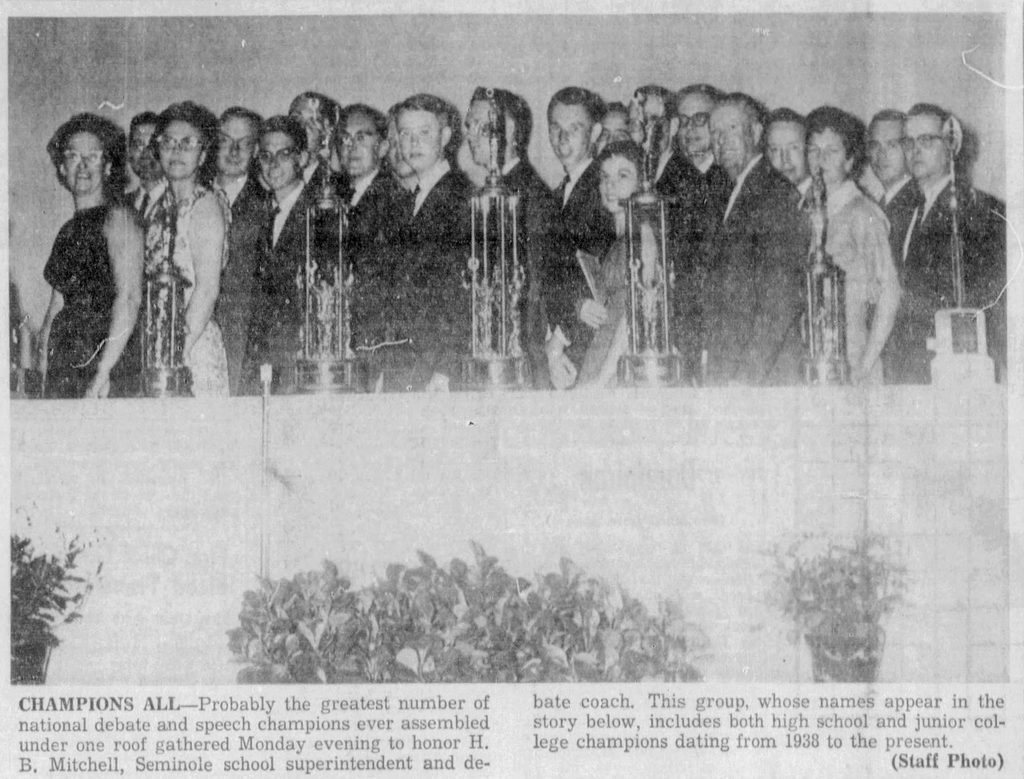
Former students later gave Mitchell a chance to hear their arguments about him. At a hometown tribute in 1960 attended by more than 300 people, they staged a mock debate over his recognition as the nation’s most outstanding debate coach by the National Forensic League. Compton returned to take the negative side alongside Betty Stanfill, who recalled his advice to spend more time on debate and less on courting.
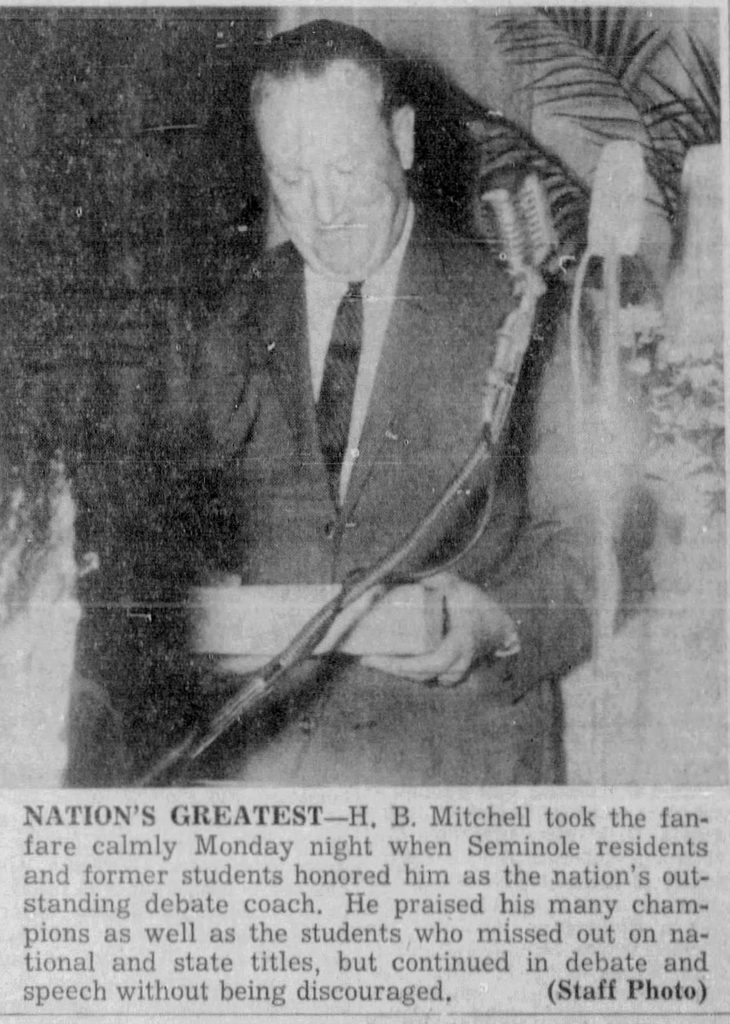
The gathering also recognized how much of Mitchell’s life took place outside the classroom. Producer publisher Milt Phillips said he “has never learned to say ‘no’ to a civic chore,” citing his work in summer recreation, Community Chest and Rotary.
By then, Mitchell’s school responsibilities had expanded as well. He became superintendent in 1959, overseeing a system that still included the junior college. Yet he continued teaching debate. In 1963, his class enrolled 29 students, ranging from eighth through 12th grade, with beginners entering tournaments suited to their experience.
He saw the work carrying over into their other classes.
“I have had many of my students improve their grades because they have taken debate,” he told the Producer.
The relationship between the high school and junior college changed near the end of his Seminole career. In 1969, the college began operating separately under President Elmer Tanner, holding classes at First Presbyterian Church while a permanent campus was developed. Mitchell, who had helped educate its students and served as its president, remained with the public schools.
However, the school board terminated his employment in 1970. The Daily Oklahoman reported that an Oklahoma Education Association Professional Practices Commission investigation found the board’s stated reasons unsubstantiated and censured it. That July, Mitchell was named coordinator of teacher education in the certification section of the Oklahoma State Department of Education.
His former students continued to recognize him after his years in Seminole ended. In 1989, Boren honored Mitchell at the National Forensics League’s national tournament in Golden, Colorado. The student who had once been afraid to speak in class was now a U.S. senator, crediting his teacher with a career that “demonstrates the great difference that teachers make in the lives of students.”
Mitchell died Jan. 5, 1990, at age 82. His name remains attached to honors for debaters and their coaches. The National Speech & Debate Association, formerly the National Forensics League, awards the Harland B. Mitchell Trophy to its national champion Policy Debate team.
In Oklahoma, the Oklahoma Speech Theatre Communication Association recognizes outstanding high school speech and debate coaches through its H.B. Mitchell Outstanding High School Forensics Coach Award.
His sons later honored him at the university where he had once competed as a student. In 2012, Dr. Frank Mitchell and Robert Mitchell established the H.B. Mitchell Endowed Scholarship for Debate at the University of Central Oklahoma.
The scholarship supports Oklahoma students beginning their college education at UCO. Mitchell had arrived in Edmond with a debate scholarship of his own. His sons’ gift created that same kind of opportunity in their father’s name.