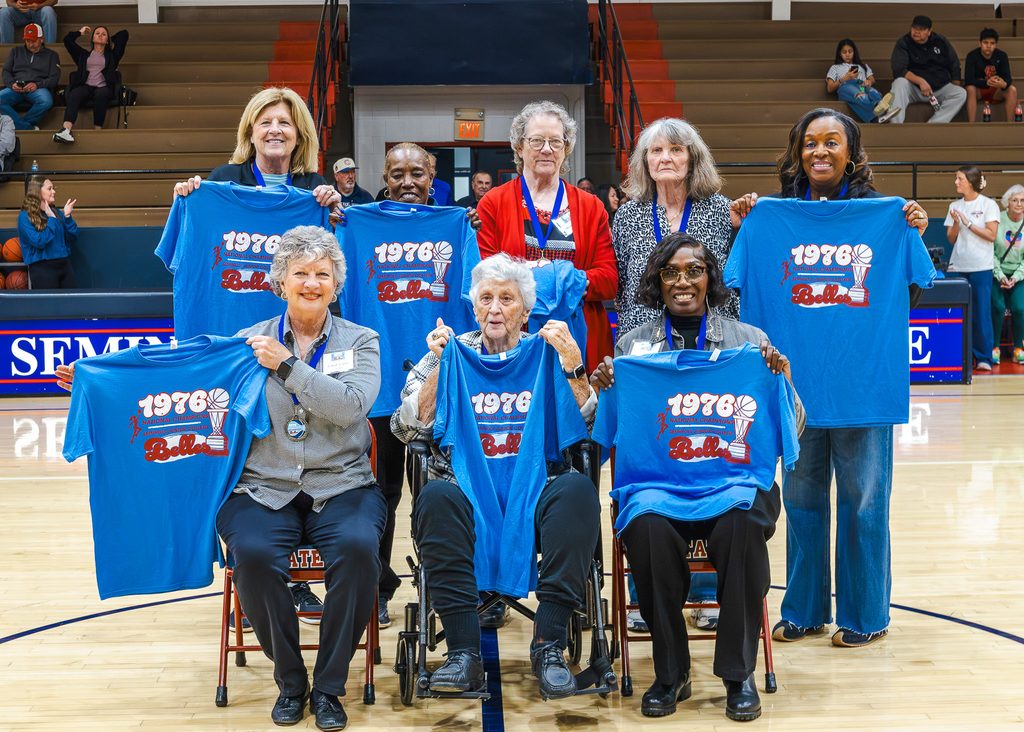
The Seminole Belles were ready to hitchhike home from Arkansas. Their bus had broken down, they had a game in Oklahoma that night and, as the players pointed out to their driver, only five of them had to get there by tipoff.
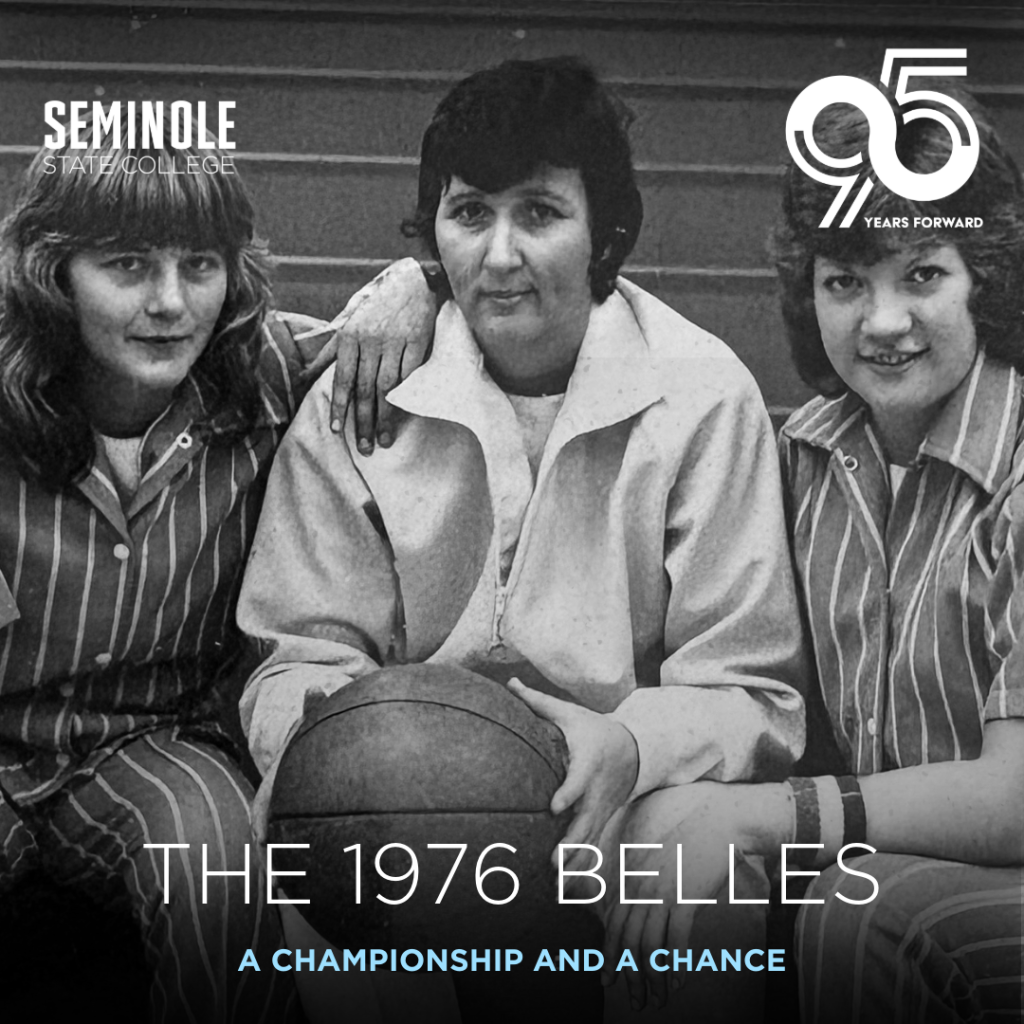
Jay McAlvain, the Seminole Junior College instructor who drove the bus, found a U-Haul in the phone book. In an account he wrote years later, McAlvain recalled that between Okemah and Seminole, the players changed into their uniforms in the dark while Coach Dixie Woodall wrapped ankles. Some came out of the truck with their uniforms on backward, others inside out.
By the time the team arrived at the gym, Claremore Junior College had already finished warming up. The Belles got a few minutes on the floor, struggled through the first half and came back to win.
“We didn’t have deep pockets … but with the type of players that Dixie had back in those days, it wouldn’t make any difference if they went down there on bicycles … they were going to beat you,” said Dr. Thurman Edwards, Seminole’s Athletic Director from 1975-2003.
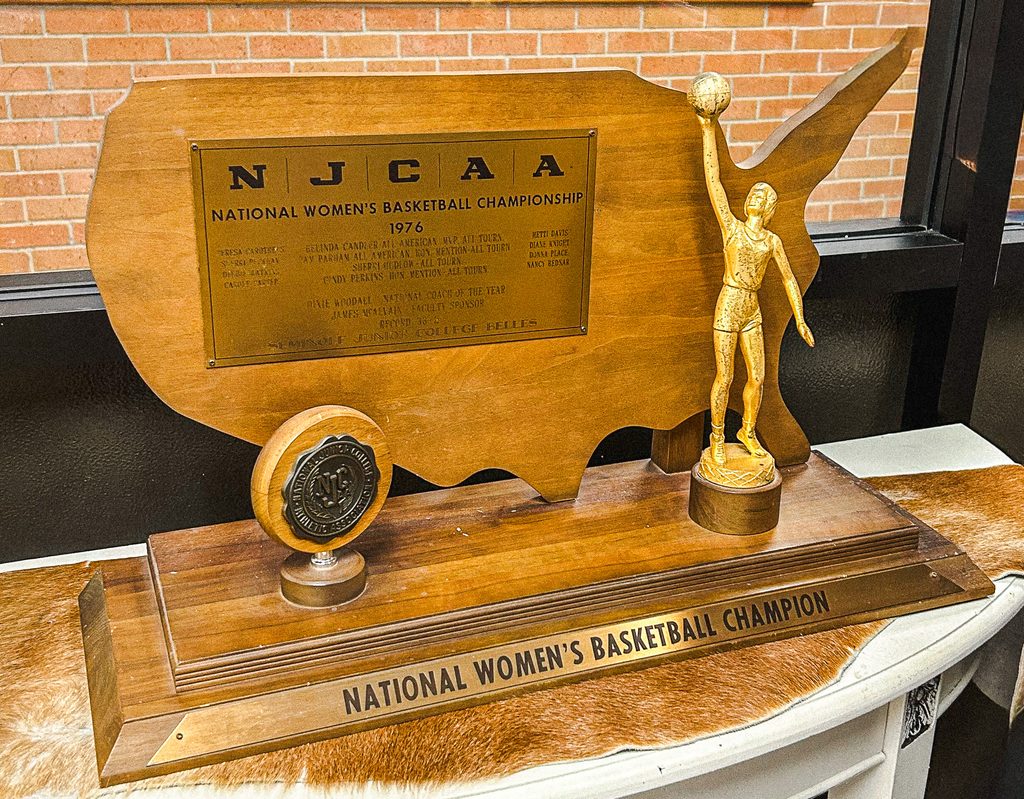
The Belles finished 36-2 in 1976 and won the first national team title in athletics for the school now known as Seminole State College. Candler was the tournament’s most valuable player. Two years earlier, coming out of Fort Towson High School, she had wanted to go to college and had given little thought to whether she would even start for Woodall.
“The biggest thing was just being able to play,” Candler said. “So however I fitted in, that was fine.”
A Place on the Team
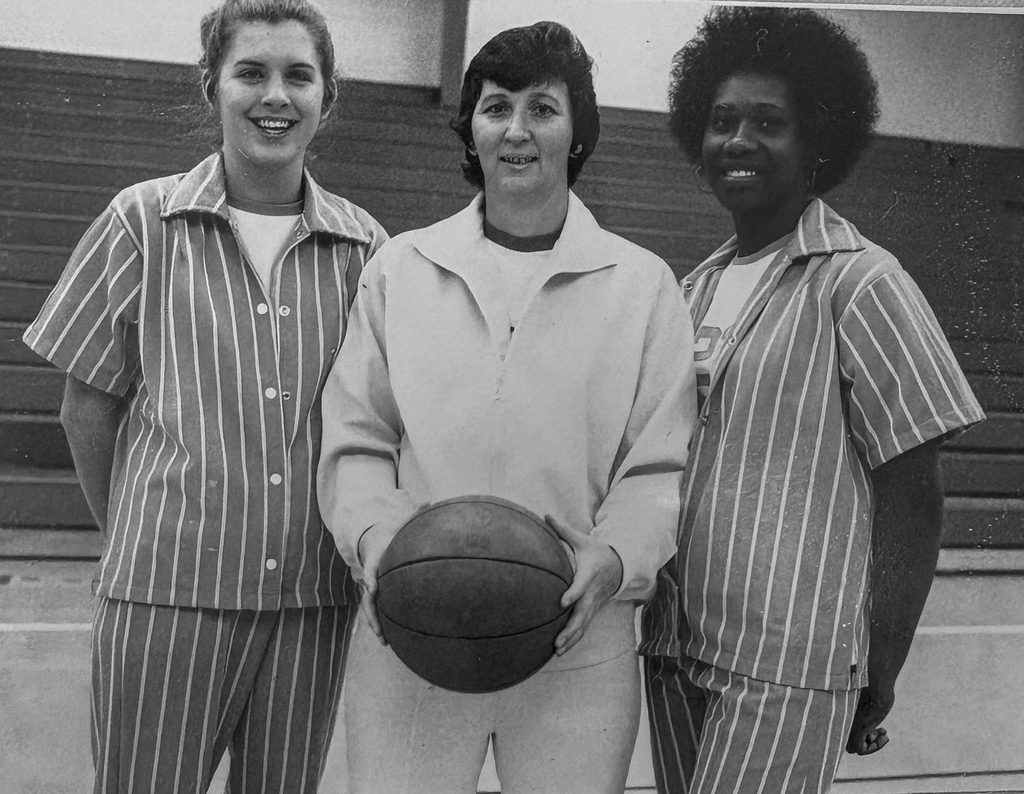
Woodall recruited two players from Fort Towson who had been making each other better since about sixth grade. Hettie Davis was a guard. Candler played in the post. Whatever else the two would have to learn at Seminole, Davis already knew where Candler wanted the ball.
In Dale, Woodall’s future point guard nearly let her chance go by. Carole Carter, the eighth of 12 children, had spent years trying to make All-State. When the selections came out and her name was missing, she skipped her scheduled visit to Seminole.
“I felt unworthy,” Carter said.
Her high school coach, Harold Jones, came looking for her in English class. He reminded her of the things she could do for a team. She could run, she could lead and she could get the ball to somebody who could score. Jones arranged a second visit. Carter’s mother went with her, and Carter signed. Soon a letter from Woodall told her when to bring her things to the trailers.
Kenneth Hull had coached Seminole’s first women’s basketball team in 1970-71. Woodall took over in 1971, when a $10,000 gift from the Blue Bell sewing plant helped support the program. The Belles took their name and their colors, Columbia blue and white, from the company. In March 1976, The Sunday Oklahoman reported that the players’ tuition was paid and that they paid a small fee to live in the trailers. Woodall told the newspaper she expected to offer full scholarships the following year.
Six women shared Candler’s trailer, with three bedrooms and a little kitchen. The players ate together, went to parties together and went to church together. Away from home for the first time, some stayed up half the night talking. Woodall held practice early. Fifty years later, Candler still remembers trying to get up in the morning, and the shin splints she got running on the gym’s concrete floor.
For Candler and Davis, an Oklahoma-Texas all-star game had been their first chance to play five-on-five after years of playing three to a side on each half of the court. At Seminole, Woodall gave them plenty of chances to learn the full-court game against one another. Seven of the 11 Belles had been All-State players, according to the 1976 newspaper profile. Nine were on the dean’s honor roll.
Woodall had played on Nashville Business College’s 1960 Amateur Athletic Union national championship team and earned All-American honors three times with the Raytown Piperettes. She toured South America with a U.S. team in 1965, then played in the world championship and won a Pan American Games silver medal in 1967. For all the basketball Woodall knew, Carter remembers a short list of set plays and a great deal of scrimmaging.
“She recruited horses and she was smart enough to let them run,” Carter said.
When Woodall Stood
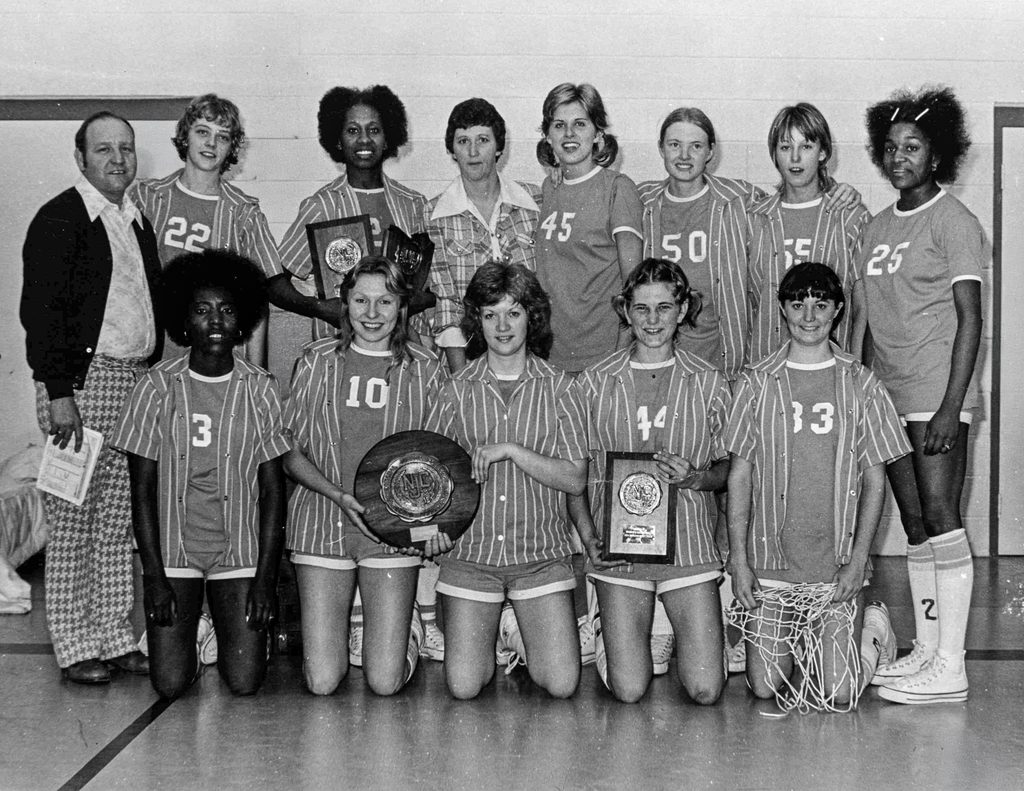
The Belles finished fourth at the 1975 national tournament. Candler had gone to Kansas that first year with little idea how good Seminole might be. She came home wanting to win the whole thing. Nearly the entire team would be back to try.
Woodall brought home something from the tournament, too. Temple had beaten Seminole with a half-court trap that gave Carter trouble. Woodall taught the Belles to run it themselves. The next time they played Temple at a tournament in Texas, Seminole won.
Carter remembers the team sitting in a restaurant in Temple afterward, happy to be celebrating a win over the team that had beaten them at nationals. Before their meals arrived, Carter said, the owner told Woodall that the team’s “colored” players would have to eat elsewhere in the restaurant.
“What color are you talking about? What color are they?” Carter recalled Woodall asking.
Carter said Woodall gave the owner a chance to reconsider, then made her position clear.
“We’re all going to eat together, or we’re not going to eat at all,” Woodall said.
Woodall stood.
“We all stood up,” Carter said.
The Belles returned to the bus and found another restaurant down the road.
Candler later explained why that moment mattered so much to her. She had grown up being warned to be wary of white people’s motives, including coaches who might value her only for the games she could help them win. Candler remembers the team’s departure as the moment she understood how deeply her coach and teammates cared about her.
Kansas City on the Radio
Back in Seminole, a radio sat on top of the refrigerator in the trailer. The players had no telephone, but they knew the number of the local station. Whenever they could borrow a phone on campus, Carter said, they called in the same request. They wanted to hear “Kansas City.” The national tournament was in nearby Overland Park, Kansas.
The Belles had gone 9-2 against four-year schools. Phillips University and Wayland Baptist handed them their only losses of the season.
“We knew we were going there to win it all,” Carter said. “I mean, we just knew it.”
Two of Carter’s high school teachers made the trip. Candler had family in the stands and remembers seeing college President Elmer Tanner there. Among the few things left behind in Oklahoma were Carter’s basketball shoes. Woodall found her a pair to borrow from Johnson County Community College. Her teammates wore white shoes. Carter’s were gold, with sunflowers on the toes.
Seminole beat Carl Sandburg, DuPage and Panola to reach the National Junior College Athletic Association championship game against Jackson Community College of Michigan. Jackson’s zone defense made it hard to get the ball inside to Candler. What Carter remembers is how often Sherri Hudlow was there when a shot missed, pulling down the rebound and putting it back up.
Hudlow scored 24 points. Candler scored 23. Pam Parham and Cindy Perkins added 16 apiece. Seminole won 83-74.
Candler earned tournament MVP honors, and Hudlow made the all-tournament team. Carter, who had been embarrassed to take the floor in those gold shoes, peeled a sunflower off one toe and stuck it to her championship medal. She still has it.
After the Final
Woodall took the Belles back to the national final in 1977, where they would finish runner-up. That year she also helped coach the U.S. team that won silver at the World University Games in Bulgaria. Her 2005 Women’s Basketball Hall of Fame induction program credits her with a 390-97 record over 14 seasons as a head coach, 281-71 in 10 seasons at Seminole and 109-26 in four at Oral Roberts University.
Candler kept playing at the University of Nevada, Las Vegas. By the end of her college career, she felt she was in the best shape of her life, just as she faced the prospect of having nowhere to play. Then the Houston Angels drafted her. In 1979, she helped them win the inaugural Women’s Professional Basketball League championship. The pay was modest, she said, and sometimes she wondered whether a paycheck would come at all. She was glad she kept playing.
Candler earned degrees in mathematics and computer science. At IBM, she helped build a system for NASA that monitored space shuttle components. She went on to work in the oil and gas industry and in health care.
Carter played at Northwestern Oklahoma State University and spent 42 years as an educator and coach. When the Belles get together, they still call one another by their last names. Hudlow became a registered nurse. Perkins and Teresa Carothers became teachers and coaches. Carter still works with Native American students.
Carter thinks about what it took for families like hers to send a child to college. For her and for many of the women she played with, she believes, the chance to play basketball gave them a way out of poverty.
“And Dixie and Seminole State College gave us an option,” Carter said. “And had we not got that, there’s no telling where we would be. And certainly we wouldn’t be where we all are now.”